
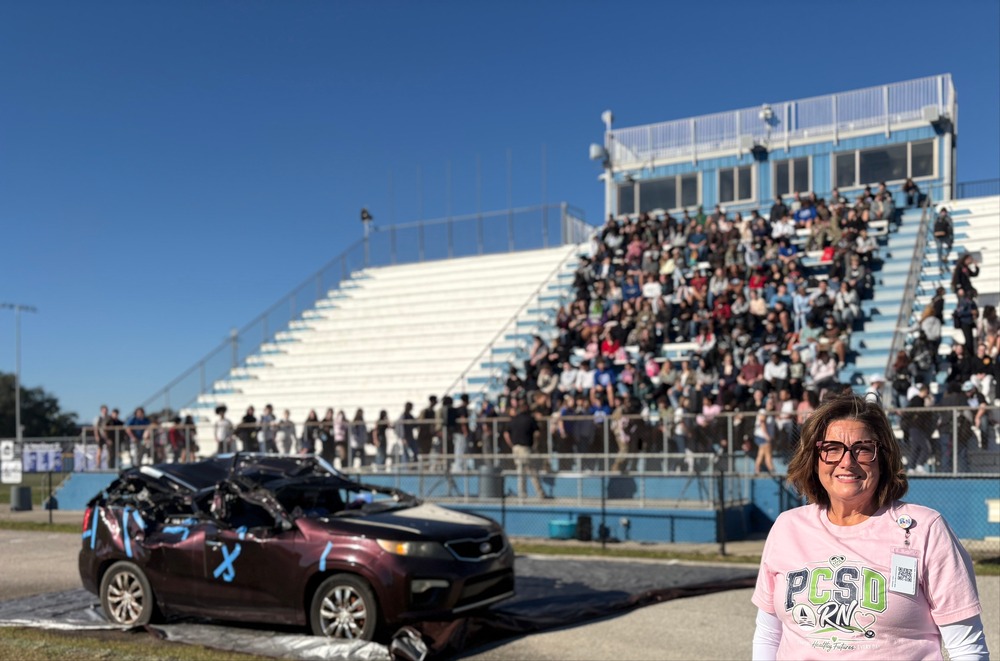
Students in grades 11 and 12 at Interlachen Jr.-Sr. High School participated in The LifeFlight Experience on October 22, an educational program presented by Baptist Health and Wolfson Children’s Hospital in partnership with local emergency response professionals. Coordinated by the district's Health Services Coordinator, Kena Foster, the experience took place during National Teen Driver Safety Week, October 18–24.
Through an interactive panel discussion and a realistic, live crash simulation, students learned what happens before, during, and after a serious vehicle crash and why the decisions they make behind the wheel matter.
The morning began in the school gymnasium, where students watched LifeFlight videos and heard from professionals representing law enforcement, fire and emergency medical services, LifeFlight, and nursing.
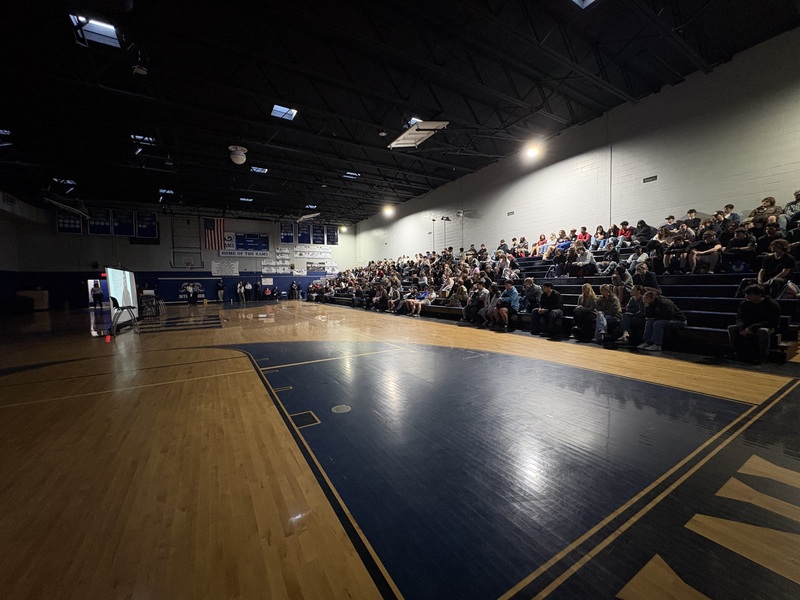
The panel featured Putnam County Sheriff Gator DeLoach, Chief Shirk representing Fire and EMS, Matt Wolfe representing LifeFlight, and Kena Foster and Anise Williams representing nursing.
Panelists answered questions about the stages of a crash and what happens as emergency personnel respond. The discussion followed the process from the initial scene response through emergency transportation and hospital care, helping students understand how different professionals work together during a critical incident.
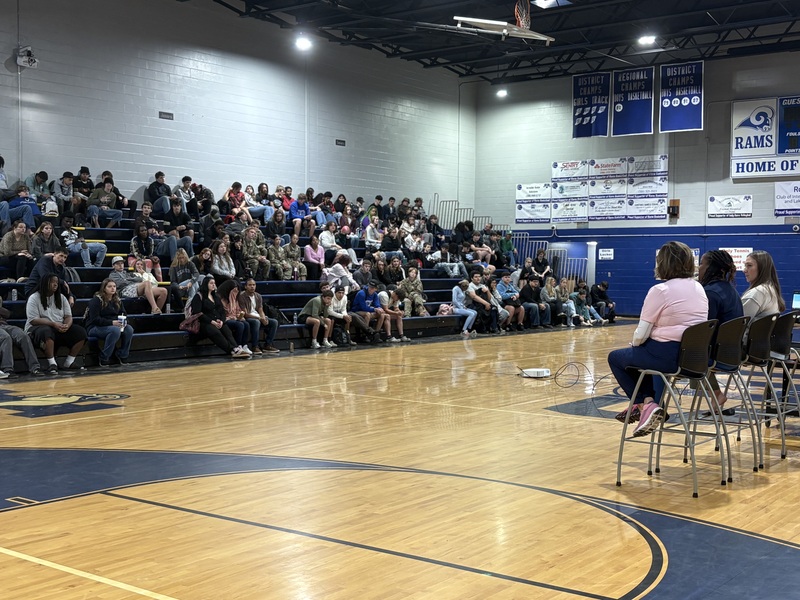
Sheriff DeLoach left students with a straightforward but important reminder: slow down and take your time so you can get where you need to go safely.
LifeFlight representatives emphasized that driving decisions affect more than the person behind the wheel. A crash could involve someone else’s child, a friend, or a classmate, a reminder that every driver has a responsibility to consider the safety of others.
Kena Foster, also shared a personal experience from her early years as a nurse. She recalled treating a young man who had been ejected from a vehicle during a crash and explained that she remains in contact with him to this day.
Her story illustrated how the effects of a serious crash can last long after the initial emergency. Foster also highlighted the challenges of living in a rural community, where dark roadways and longer travel distances can make emergency response especially challenging.
Following the panel discussion, students moved to the football field, where they watched a realistic, minute-by-minute simulation of a vehicle crash and the emergency response that followed.
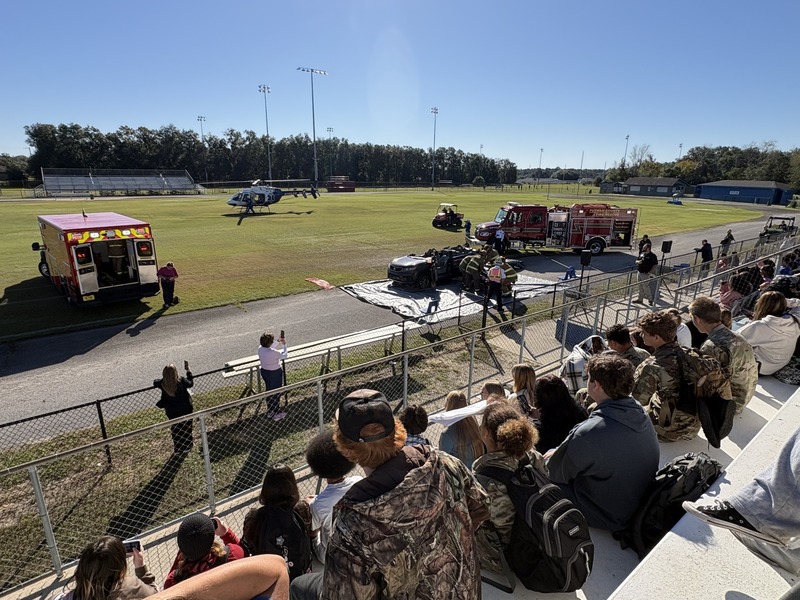
A crashed vehicle and two participants portraying victims were positioned on the field as Putnam County Fire Rescue and EMS personnel arrived in emergency vehicles with lights flashing and sirens sounding. Students watched as responders assessed the scene, assisted the victims, and worked to remove one victim from the vehicle using specialized rescue equipment. The simulation demonstrated the coordination and teamwork required during a serious crash, giving students a closer look at the training, equipment, and decisions involved in emergency response.
The experience reached a dramatic moment when the LifeFlight helicopter landed directly on the football field as students watched from the bleachers. Emergency personnel then simulated preparing a victim for air medical transport, demonstrating how ground responders and air medical teams coordinate their efforts to care for critically injured patients.
By bringing the process to life, the demonstration helped students connect the information shared during the panel with the realities of responding to a serious roadway emergency.
National Teen Driver Safety Week encourages awareness of teen driving risks and promotes conversations about responsible driving decisions.
The message from the day was clear: slow down, stay focused, and remember that the choices you make behind the wheel can affect someone else’s life. Because getting to your destination safely is always more important than getting there quickly.
More pictures from the event can be found here: https://drive.google.com/drive/folders/1BQ3QnwdQ13qwrBqkM0EFToBoYBIh_uzQ?usp=drive_link
#ProudtobePCSD